

Aircraft Polishing & Wax in San Diego
Sun, salt air and ramp grime slowly dull an aircraft's paint, leaving it hazy, faded and covered in fine swirl marks. Washing alone won't bring that gloss back. Our mobile team machine polishes away haze and light oxidation, then hand-applies a protective wax, so your aircraft looks its best on the ramp and stays easier to keep clean between details.
Why it matters: Aircraft based near the San Diego coast live in salt air and strong sun. Polishing removes the worn surface layer, and wax adds a barrier against the next round of sun and salt.
Bring back the gloss that sun and salt air take away, polished and sealed right at your hangar or ramp.
What’s included
Paint inspection and walkaround
Exterior dry wash and degreasing to prep the surface
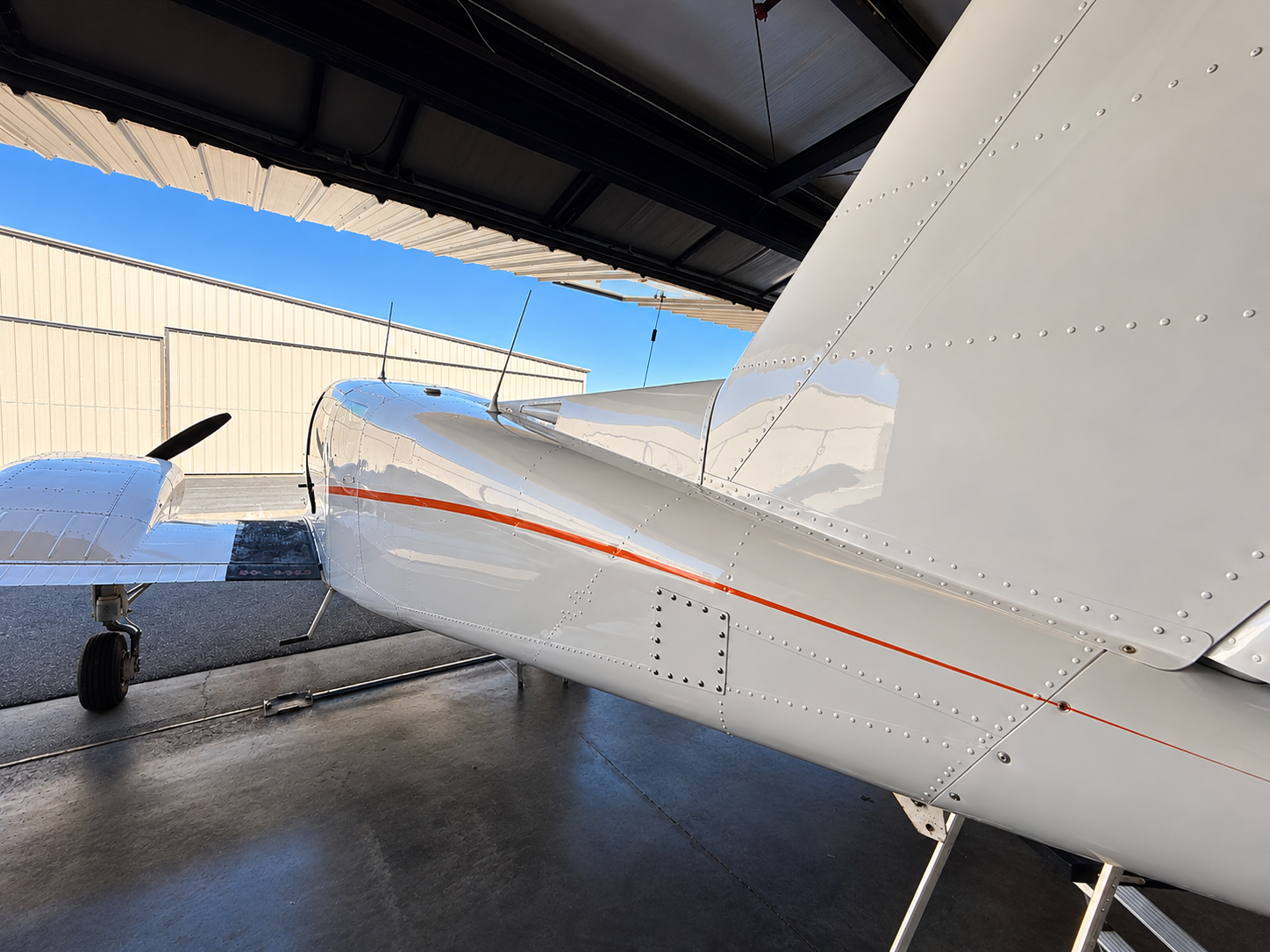
Machine polishing of painted surfaces to remove haze, light oxidation and swirl marks
Careful work around decals, tail numbers, seams and edges
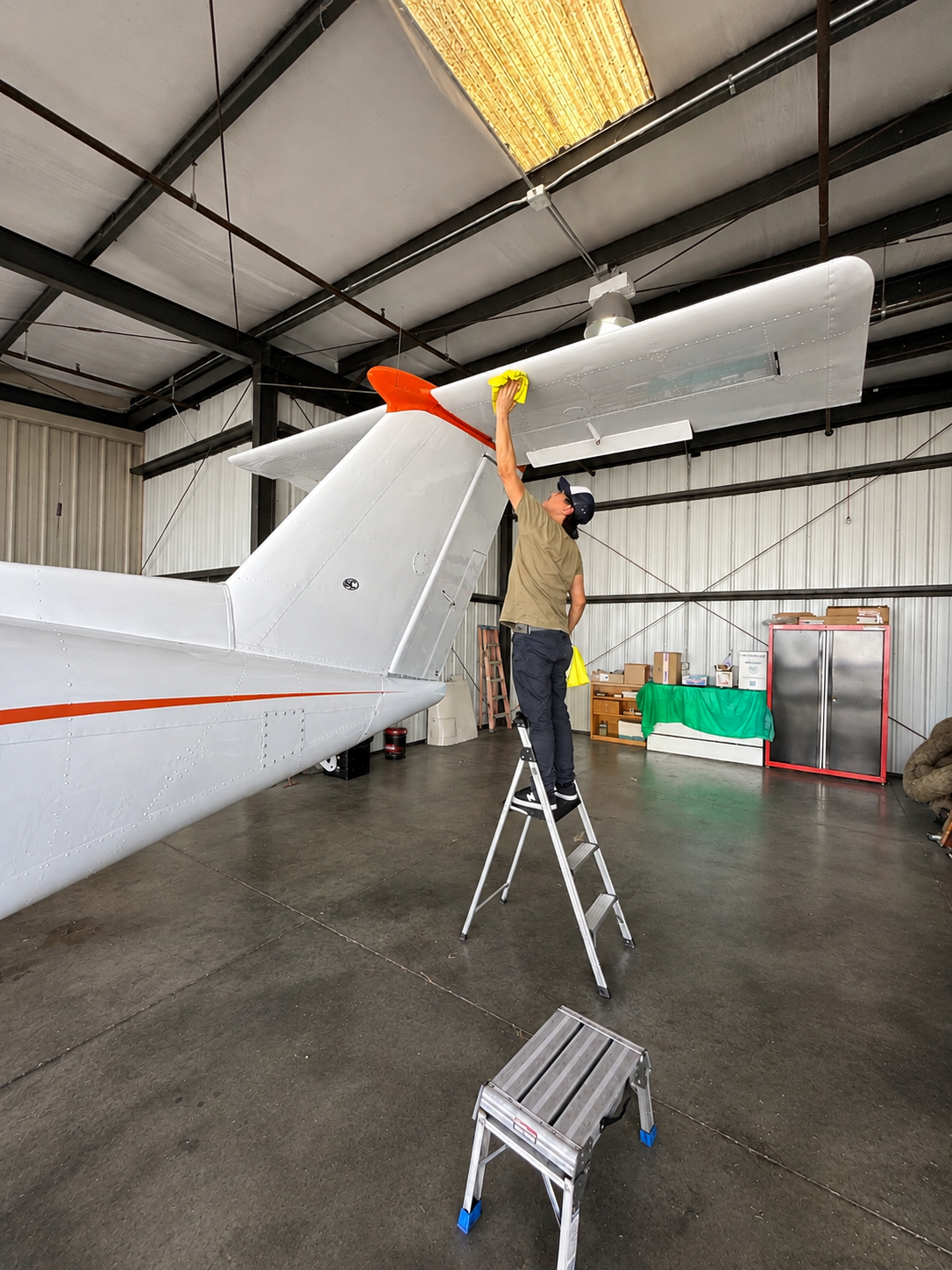
Hand-applied protective wax on all polished surfaces
Final wipe-down and inspection
Method
Our process
01
Paint Inspection
We walk the aircraft with you, note oxidation, scratches and problem areas, and agree on what to expect before we start.
02
Wash & Prep
We dry wash and degrease the exterior first, so no dirt gets dragged across the paint while polishing.
03
Polish Panel by Panel
We machine polish section by section to remove haze and light oxidation and bring back depth and gloss, working carefully around decals, tail numbers, seams and edges.
04
Hand Wax & Final Inspection
We seal the finish with a protective wax applied by hand, wipe down the aircraft and do a final walkaround before we leave.
Aircraft we service
We polish and wax everything from piston singles, owner-built aircraft and turboprops to helicopters, super-midsize and heavy jets. Business jets are our specialty, but every airframe gets the same care. We come to your hangar or ramp at San Diego International (SAN), Montgomery-Gibbs (MYF), McClellan-Palomar (CRQ), Gillespie Field (SEE), Brown Field (SDM), Ramona (RNM), Fallbrook (L18) and French Valley (F70), and other Southern California airports on request.
Questions
Frequently asked questions
-
Polishing removes only a very thin layer of worn, oxidized surface to bring back the gloss underneath. We inspect the paint first and work carefully around edges and thin areas.
-
Polishing removes haze, oxidation and light swirl marks. Deeper scratches that go through the paint may need paint repair. We’ll tell you what to expect during the inspection.
-
Wax gives a deep shine and short-term protection, and it needs to be reapplied over time. Our Ceramic Coating & Permaguard option lasts longer and makes the paint easier to clean. Polishing first is the best way to prep paint for either one, so ask us about adding a coating to your polish.
-
Pricing depends on your aircraft’s size, the condition of the paint and your location. Send us the make and model and your airport, and we’ll send a custom quote.
-
It depends on the size of the aircraft and the condition of the paint. We’ll give you a time estimate when we confirm your appointment.
-
We recommend waxing about every 3 months to keep the paint protected. How often your aircraft needs a polish depends on the condition of your paint, so we’ll suggest a schedule after we see your paint.
-
Yes. We work carefully around decals, tail numbers and other markings so they stay crisp and undamaged.
-
Yes. We’re fully mobile and work at hangars, ramps and other approved airport locations across San Diego County, following each airport’s access rules.
Clients
Part 91
Part 135
FBOs
MROs
Flight Schools
General Aviation
Keep exploring
Related services
Get started
Ready to bring back the shine?
Request a quote today.